
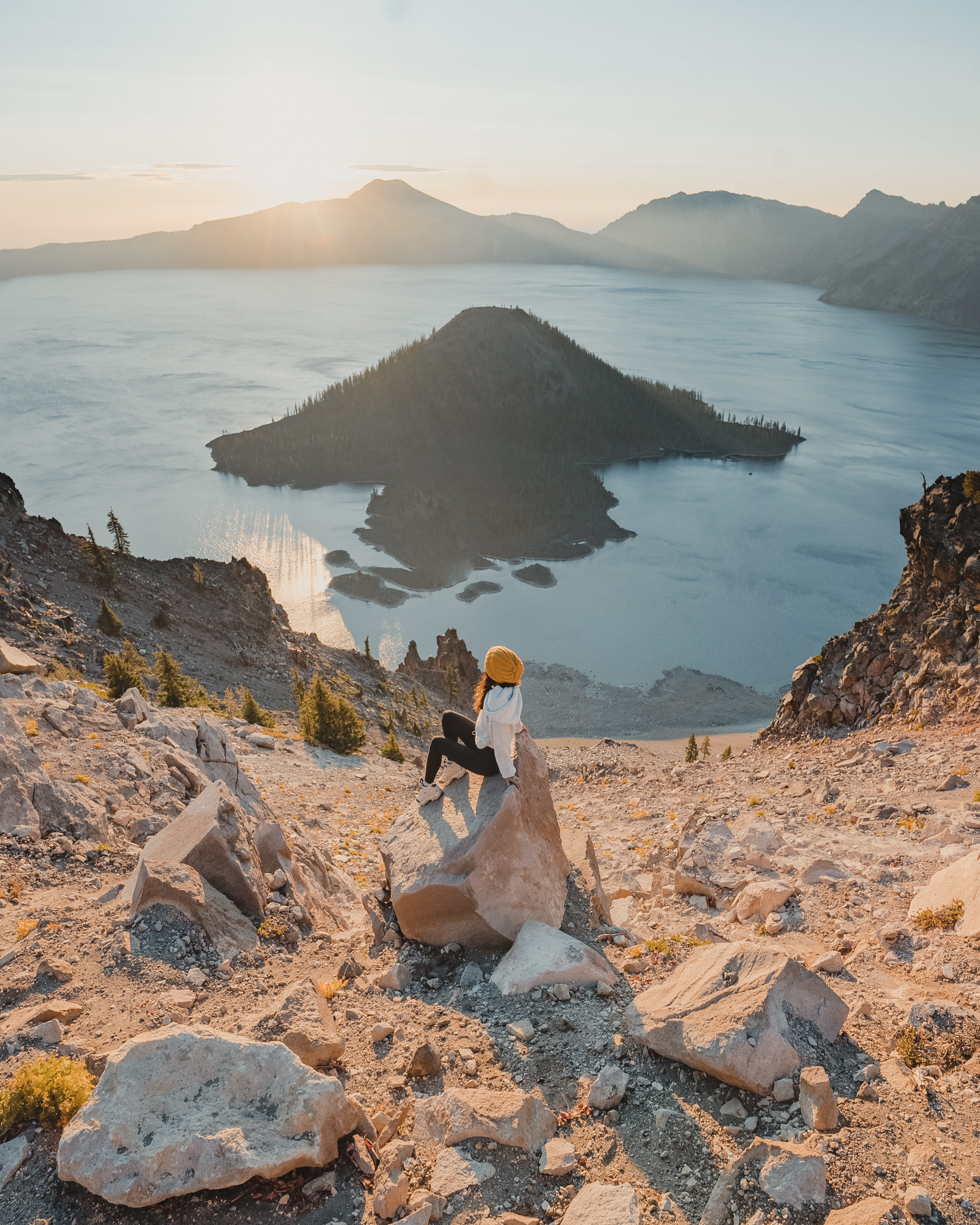
Whether it’s your first time going hiking or you consider yourself a seasoned explorer – it’s always best to prepare for your next adventure by packing 10 essentials.
- Navigation – This includes the GPS on your phone; however, service isn’t always guaranteed in the backcountry. I use AllTrails and always download the map of the trail I plan to hike before heading out. A compass, paper map, and Garmin devices are a few others you can bring along.
- Flashlight / headlamp – Having a head lamp and extra batteries packed away has come in handy for me on more than one occasion. I tend to take my time soaking in sunsets and get caught hiking back in the dark every now and then.
- Water– Always, Always, Always PACK EXTRA WATER. Most hydration packs carry 1.5 to 2 liters- this is great and convenient, but ya never know when a situation can go sideways. The weather, terrain, and distance are important factors to consider when deciding how much to carry with you. I like to bring a bottle of water plus a portable water filter in addition to the hydration pack.
- Food– Keep in mind, you’ll be burning energy as you go – so pack a few granola bars, trail mix, and maybe even a pre-packed sandwich. (Keep in mind: Trail length, trail difficulty, # of hours/days on trail)
- Extra Clothes– Nature can be unpredictable, having an extra layer of clothing to prepare for sudden changes is a good idea. Try to avoid cotton base layers, because they’re slow to dry- I like to bring a wind breaker jacket; it’s waterproof and lightweight.
- Sun protection– Whether the forecast calls for clouds or sun, it’s important to protect your eyes and skin from any harsh UV rays. I always bring my sunscreen, sunglasses, and a hat.
- First Aid Supplies- Gnarly blisters, a broken ankle, ear infections, and jumping cacti are a few things I’ve come across when out on a trail – each requiring first aid care. My kit usually consists of a few band aids, antibiotic wipes, tweezers, gauze, tape, a reflective emergency blanket, aspirin, and ear drops.
- Fire- It’s important to check for fire regulations and restrictions before heading to your destination. Fire is a useful tool in an emergency situation- it can be used as a heat source, for cooking, or to send an emergency signal. Waterproof matches and/or a fire starter are best suited for this.
- Knife/Multi-tool- Bringing tools that can help repair gear and equipment is essential in the outdoors. & I feel that this doubles as first aid- it’s not a bad thing to be over prepared here.
- Emergency Shelter- If you find yourself in a position where it’s best to stay put than to carry on, you will want to protect yourself from the elements of nature (sun exposure, rain, and harsh winds). Having a lightweight tent, tarp, hammock, or emergency blanket could save you in an emergency survival situation.
You can find some of my favorite gear recommendations here: https://www.amazon.com/shop/tlee_love05
 Nine Peaks Two Valleys